

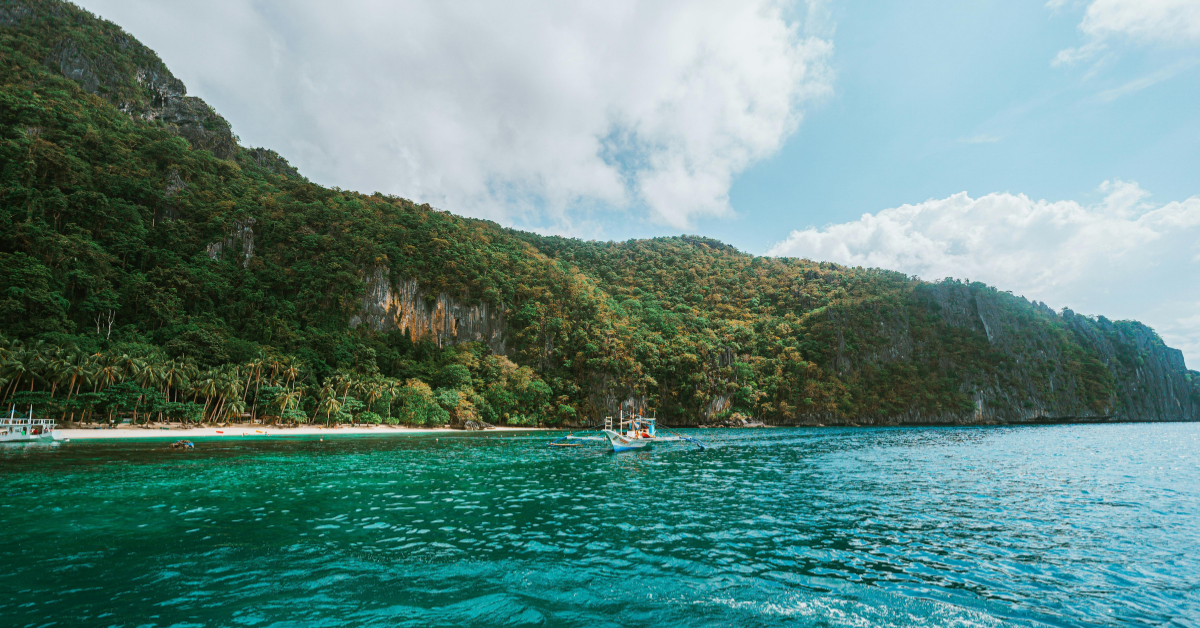
El Nido sits at the northern tip of Palawan, surrounded by limestone karsts and island-hopping waters. Amari by Vivere is on Rizal Street in the town centre — and timing your visit makes the difference between glassy turquoise water and a rained-out afternoon.
The short answer: the best time to visit El Nido is between November and May, when dry weather opens up island-hopping tours, diving visibility peaks, and the El Nido sunsets are uninterrupted. But each month has its own character — and depending on what you want, the best time might surprise you.
Dry season (November to May): peak travel months
November to January — the sweet spot
The northeast monsoon (amihan) brings cooler temperatures and low humidity from late October. November is when the skies clear up but peak crowds haven’t arrived. Water visibility around Shimizu Island and Big Lagoon improves dramatically.
December and January are peak season — higher room rates, fully booked tours, lively scene along Calle Hama and the beachfront. Visiting over the holidays? Book your room two to three months in advance.
- Average temperature: 26–30°C
- Rainfall: Minimal (3–5 rainy days/month)
- Crowd level: Moderate in November, high in December–January
- Best for: Honeymooners, first-time visitors, photographers
February to April — dry and hot
The driest stretch. February is comfortable; by March and April midday hits 33–35°C. Near-perfect conditions for snorkelling at Secret Beach, kayaking through the Small Lagoon, and diving the reefs off Miniloc Island. April brings local fiestas — a taste of Palaweño culture beyond the beaches.
- Average temperature: 28–35°C
- Rainfall: Very low (1–3 rainy days/month)
- Crowd level: High (February peaks for international visitors)
- Best for: Divers, adventure travellers, sun-seekers
May — the shoulder month
May is the transition. First tropical showers appear in the afternoons, mornings stay clear. One of the smartest times to visit — rates drop, crowds thin, and you can still complete all four island-hopping tours on most days.
- Average temperature: 28–34°C
- Rainfall: Increasing (8–10 rainy days)
- Crowd level: Low to moderate
- Best for: Budget travellers, couples seeking privacy
Wet season (June to October): the off-peak advantage
June to August — monsoon arrives
The southwest monsoon (habagat) hits Palawan from June. Rain is common, sometimes heavy, and boat tours can be cancelled on rough-water days. But Palawan doesn’t see the nonstop downpours of Eastern Visayas — many days have morning sunshine and afternoon showers.
June is manageable. July and August are the rainiest, and some operators suspend trips to more exposed islands. Room rates drop 30–50% and El Nido feels like the quiet fishing town it was 15 years ago.
- Average temperature: 26–31°C
- Rainfall: Heavy (15–20 rainy days/month)
- Crowd level: Low
- Best for: Budget travellers, solo explorers, surfers (Duli Beach gets waves)
September to October — tail end of wet season
September is historically the wettest month. Typhoon season is a factor, though Palawan sits outside the main typhoon belt and is rarely hit directly. October starts to improve; by late October the dry-season transition begins.
- Average temperature: 26–31°C
- Rainfall: Heavy to moderate
- Crowd level: Very low
- Best for: Long-stay travellers, remote workers, off-the-beaten-path
Water activities by month
| Activity | Best months | Notes |
|---|---|---|
| Island hopping (A–D) | Nov–May | Tour A runs most reliably year-round |
| Scuba diving | Nov–May | Visibility peaks March–April (20–30 m) |
| Snorkelling | Nov–May | Best at Shimizu and Helicopter Island |
| Kayaking | Year-round | Sheltered lagoons accessible even in wet season |
| Kitesurfing | Nov–Feb | Consistent winds at Duli Beach |
Getting the best rates
Booking in the shoulder months — May, June, and November — gives you the best balance of weather and price. Many properties offer early-bird discounts for stays booked 60+ days ahead. For dry-season weather without peak-season rates, the first two weeks of November and the last two weeks of May are the golden windows.
FAQ
Is El Nido worth visiting in rainy season? Yes — especially on a budget. Rain falls in short afternoon bursts, mornings often stay sunny, room rates are significantly lower, and Big Lagoon and Secret Beach are far less crowded. Just keep your itinerary flexible.
How many days should I spend? Four to five is ideal — time for at least two tours, town exploration, Nacpan Beach, and a rest day. Add one or two days for diving or Duli Beach.
Does El Nido get typhoons? Direct hits are rare — Palawan sits south of the main typhoon belt. Distant typhoons can still bring rough seas and heavy rain, particularly July to October. Travel insurance is recommended.
What should I pack? Reef-safe sunscreen (required at many tour sites), dry bag for boats, aqua shoes for rocky entries, light rain gear in shoulder/wet season, and a reusable water bottle. Cash is still king — ATMs exist but are unreliable.