

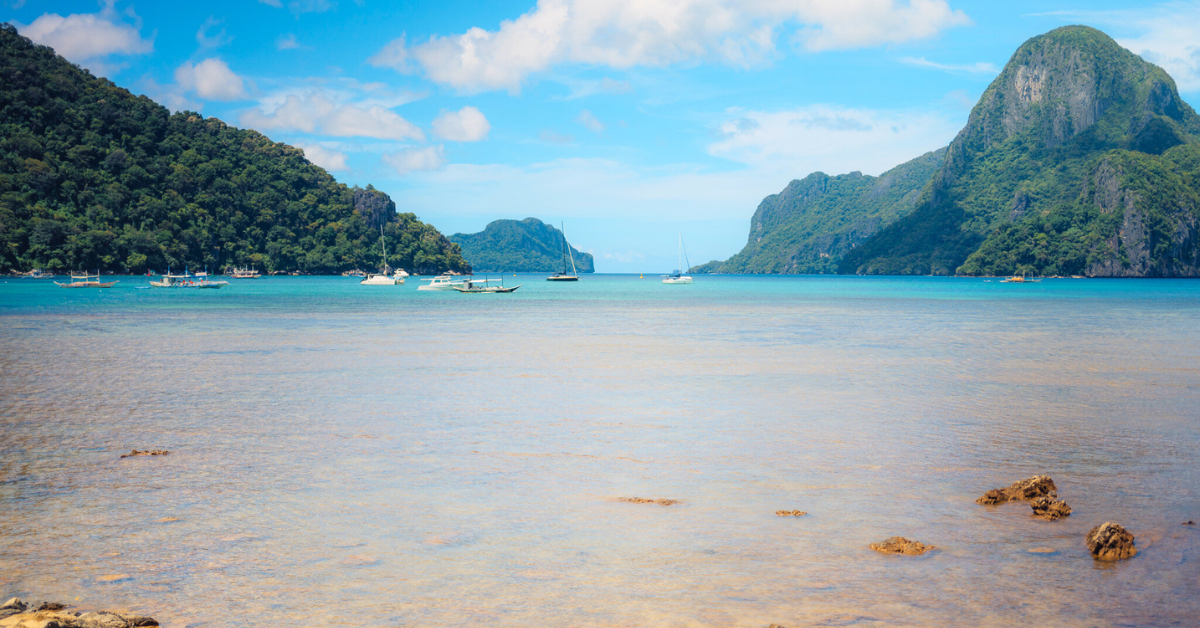
If you’re visiting El Nido, Palawan, you’ve heard people talk about Tour A, B, C, or D. These are the four classic island-hopping routes — a protected marine area of limestone cliffs, hidden beaches, lagoons, and coral reefs. Amari by Vivere on Rizal Street is a five-minute walk from the tour pier. Each tour visits different islands; choosing the right one shapes your trip.
Tour A — Lagoons and classic El Nido scenery
Tour A is the most popular island-hopping tour in El Nido, especially for first-time visitors. The route focuses on the lagoons and dramatic limestone cliffs that made El Nido island-hopping waters famous.
Typical stops:
- Big Lagoon
- Secret Lagoon
- Shimizu Island
- Seven Commandos Beach
- Payong Payong Beach
The highlight is Big Lagoon — boats glide through turquoise water surrounded by towering limestone walls. Many visitors kayak through to explore the quieter corners. If you’ve seen photos of glowing blue lagoons framed by cliffs, they were likely from Tour A.
Best for: First-time visitors who want the iconic landscapes.
Tour B — Sandbars, caves, and unique landscapes
Tour B is slightly less crowded and offers a mix of caves, sandbars, and limestone formations.
Common stops:
- Snake Island
- Cudugnon Cave
- Cathedral Cave
- Pinagbuyutan Island
- Entalula Beach
Snake Island is the standout — at low tide, a curved sandbar appears between two islands, letting you walk through shallow water with views across El Nido island-hopping waters. Cudugnon Cave is another highlight; archaeological discoveries suggest it once sheltered early inhabitants of Palawan.
Best for: Travellers who like unusual landscapes and quieter beaches.
Tour C — Hidden beaches and snorkelling
Many travellers consider Tour C the most beautiful island-hopping route in El Nido. Instead of lagoons, this tour focuses on remote beaches and snorkelling sites along the outer islands of El Nido island-hopping waters.
Typical stops:
- Hidden Beach
- Secret Beach
- Helicopter Island
- Matinloc Shrine
- Tapiutan Island
Secret Beach is one of the most unique spots in El Nido — visitors swim through a narrow opening in the limestone cliffs to reach a small hidden cove. Tour C also has some of the best snorkelling sites in El Nido island-hopping waters, with coral reefs and clear water.
Best for: Snorkelling, dramatic scenery, and hidden beaches.
Tour D — A quieter island experience
Tour D is the least famous of the four routes, but it can be the most relaxing. The tour explores areas around Cadlao Island, the largest island in El Nido island-hopping waters.
Typical stops:
- Cadlao Lagoon
- Small Lagoon (Cadlao)
- Nat-Nat Beach
- Natnat Beach
- Bukal Beach
Because fewer boats follow this route, you’ll usually find more space to swim and explore.
Best for: A calmer, quieter island-hopping day.
Quick comparison
| Tour | Best for | Highlights |
|---|---|---|
| Tour A | First-time visitors | Lagoons and limestone cliffs |
| Tour B | Unique landscapes | Caves and sandbars |
| Tour C | Snorkelling | Hidden beaches and reefs |
| Tour D | Fewer crowds | Quiet lagoons and beaches |
Which tour should you choose?
If you only have time for one tour, most travellers choose Tour A or Tour C. Tour A is ideal for the famous lagoons; Tour C is for dramatic beaches and snorkelling. If you’re staying for several days, take two different tours to see more of El Nido island-hopping waters.
Where to stay
Tours leave early. Staying in town — near the boat pier, restaurants, and breakfast — makes the day much easier. Amari by Vivere is on Rizal Street, a short walk from the pier and El Nido Town Beach.
FAQ
Which El Nido tour is best?
Tour A and Tour C are the most popular. Tour A focuses on lagoons; Tour C is known for hidden beaches and snorkelling.
Can you do multiple tours?
Yes — many travellers stay several days and take two different tours.
How long do tours last?
Most start around 9 AM and return between 3–4 PM. Lunch is usually included and served on one of the islands.
Are tours regulated?
Yes. The local government regulates island hopping to protect El Nido island-hopping waters. Visitor limits apply at certain lagoons and beaches.